Small business health checks are being updated. New purchases are paused while we prepare updated versions of these assessments. Register your interest and we’ll let you know as soon as they are available.
Allied Health
Cyber Security Health Check
Physios, psychologists, OTs, speech pathologists—you hold sensitive patient data across multiple locations. That creates risk.
In about an hour, see exactly where you're exposed, turn your gaps into a prioritised action plan you can track, and get a professional report you can show your insurer, regulator, or clients — no IT knowledge needed.
Allied health practices face unique security challenges.
You work across multiple locations—clinic rooms, client homes, aged care facilities, schools. You access patient records from laptops, tablets, and phones. You share clinical notes with GPs, specialists, and NDIS coordinators. Every touchpoint is a potential vulnerability, and most allied health practices have never assessed whether their setup is actually secure.
Mental health records are especially sensitive. If you're a psychologist, counsellor, or mental health OT, your clinical notes contain information people would never want exposed—trauma histories, relationship issues, mental health diagnoses. A breach doesn't just expose data; it can destroy lives. Your ethical and legal obligations to protect this information are absolute.
AHPRA and the Privacy Act have real consequences.
Your registration board's code of conduct requires you to keep patient information confidential. A preventable data breach can trigger a report to AHPRA — the national health practitioner regulator — and an investigation, with conditions on your registration or worse. The Privacy Act adds penalties up to $50 million for failing to protect health information, which counts as "sensitive information" needing the highest protection. "I'm not a tech person" doesn't excuse weak security.
Medicare and DVA claiming creates additional risk.
Your PRODA credentials connect you to Medicare and DVA systems. Compromised access means fraudulent claims in your name—and explaining to Services Australia why claims were lodged for patients you never saw. Compliance audits are increasing, and your security controls are now part of what they examine.
Mobile practice means mobile risk.
If you visit clients at home, work across multiple sites, or access records from your phone, you face risks that clinic-based practices don't. Lost devices, unsecured WiFi, shoulder surfing, family members with access to your work devices—have you actually thought through how you protect patient information when you're not in the office?
This health check is built specifically for allied health practices.
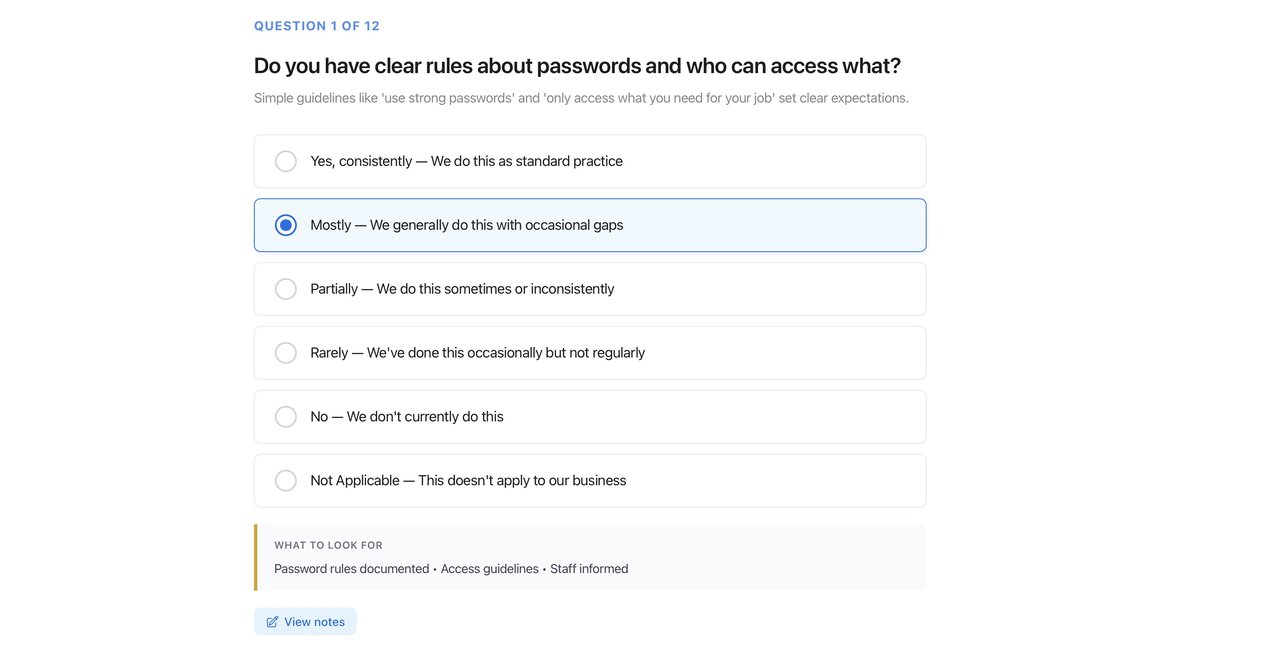
Plain-English questions covering practice management software security, Medicare/DVA portal protection, mobile device security, clinical note handling, referral communications, and the specific risks of working across multiple locations. No technical jargon—designed so any practitioner can complete it and understand the results.
What you get:
What your results look like
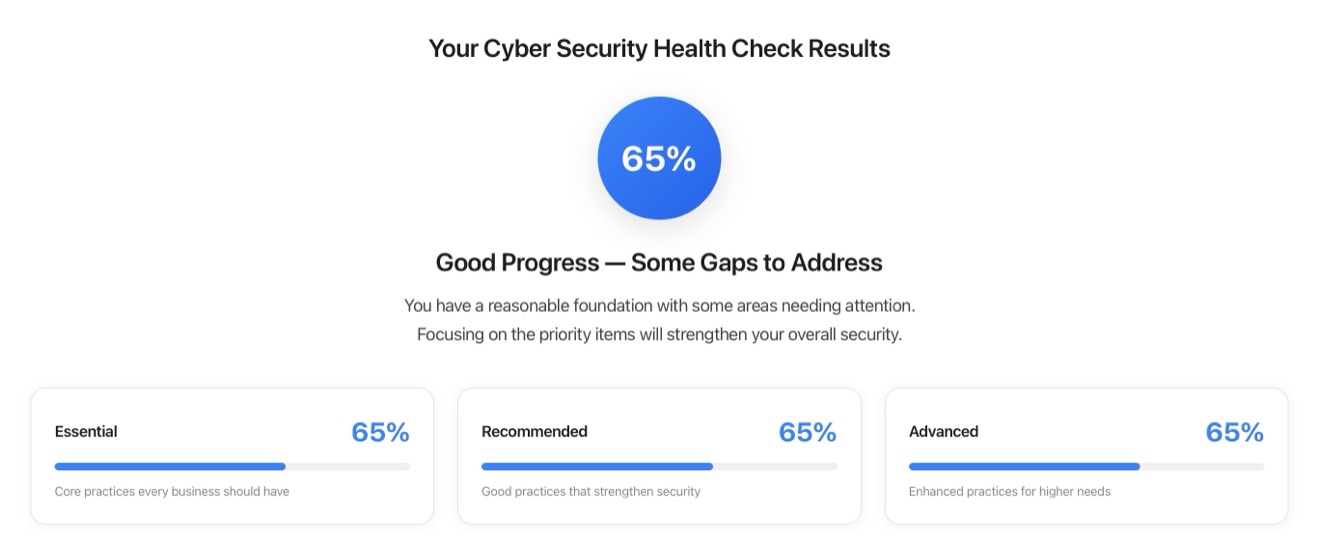
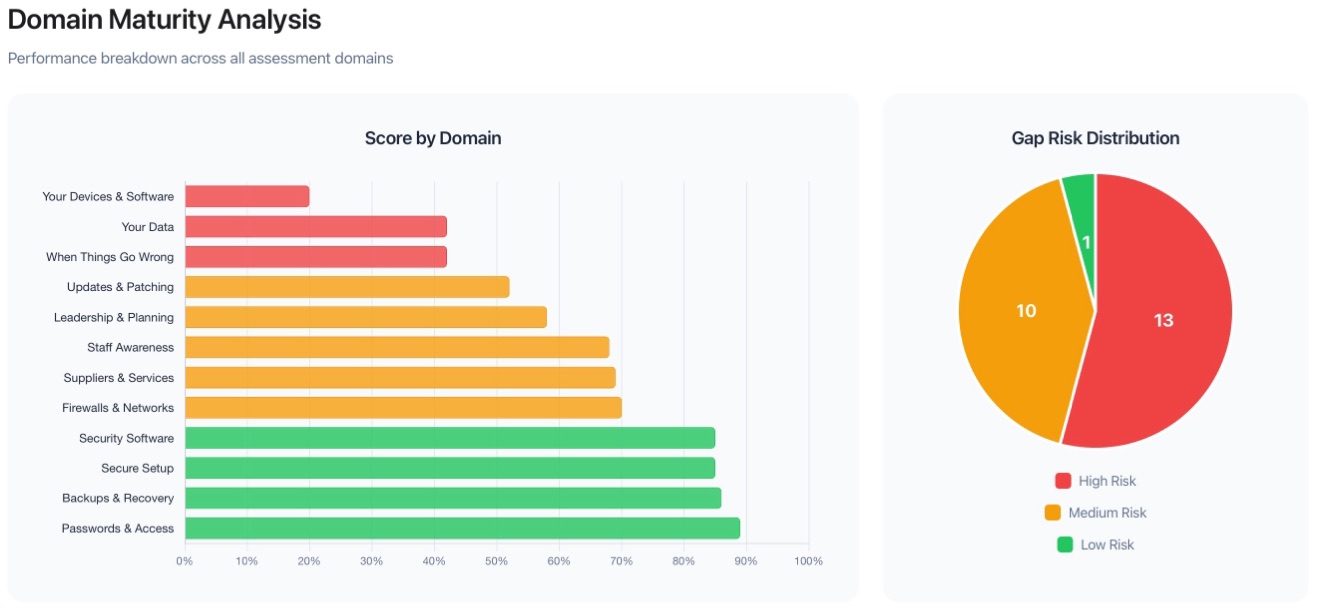
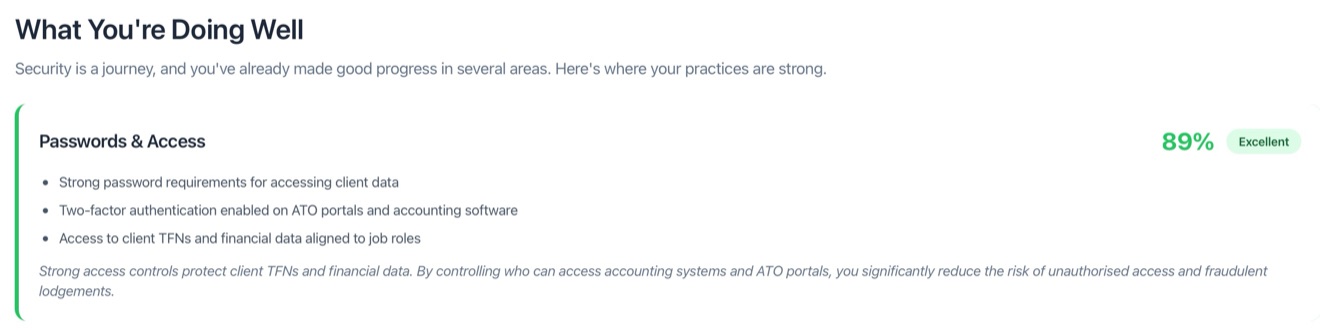
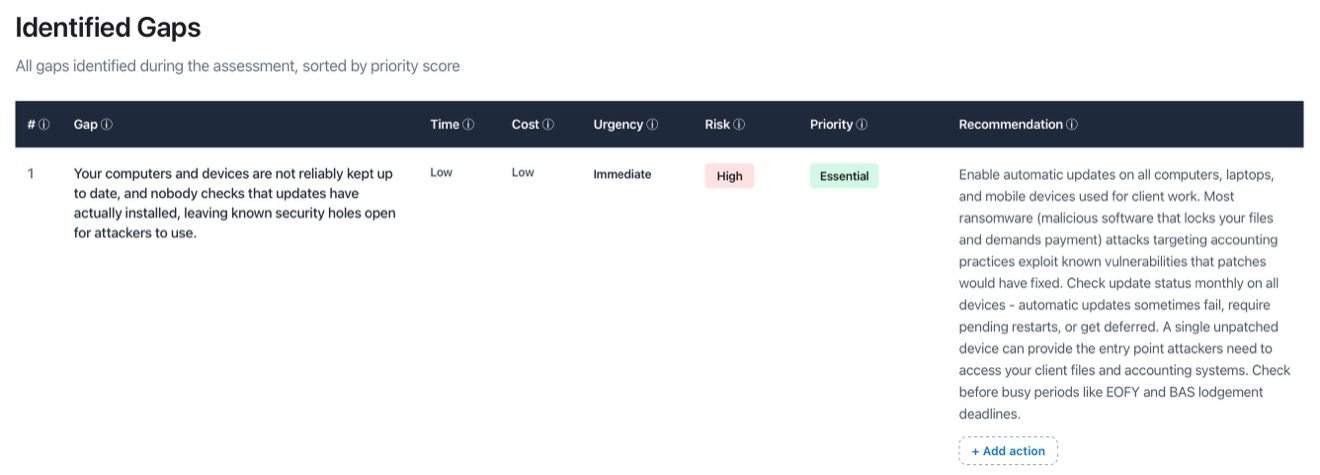
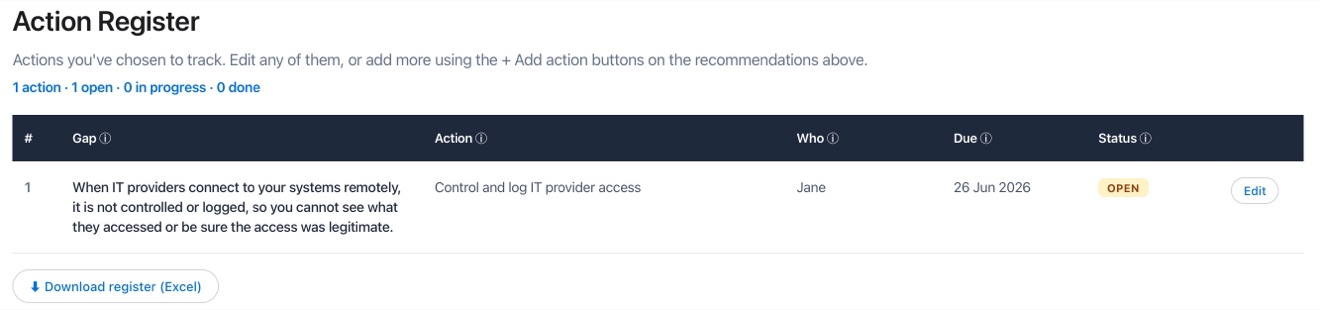
Finish in about an hour and you get a clear overall score, a breakdown across every security domain, and every gap turned into a prioritised action plan you can track and export. (Example output.)
What You Receive
Every assessment generates a comprehensive report. Download a sample below.
Summary Report
Plain-English findings with scores, prioritised improvement plan, risk associations, and resources
Download SampleComplete it in about 60 minutes. No technical knowledge required. Your data never leaves your device.
Who is this for?
Physiotherapists, psychologists, occupational therapists, speech pathologists, podiatrists, dietitians, and other allied health practitioners. Whether you work from a clinic, visit clients at home, or operate across multiple sites—if you handle patient records and want to understand your cyber security posture without needing IT expertise.
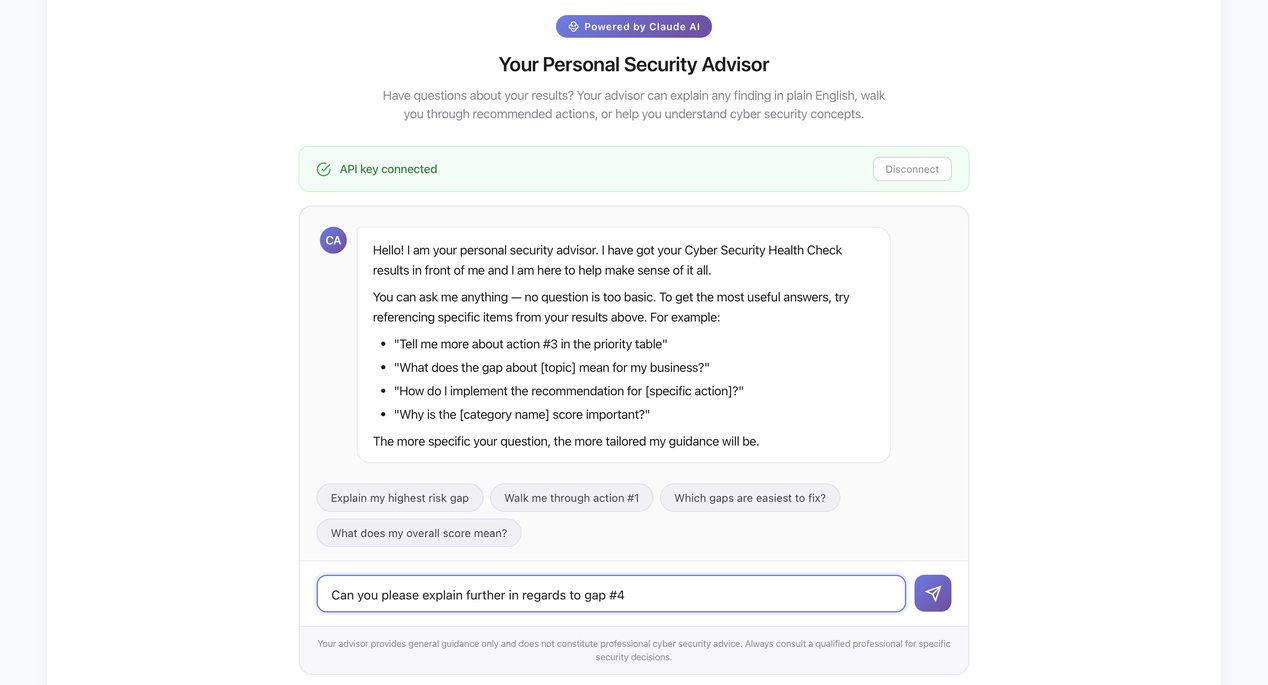
Your Assessment Includes a Personal AI Security Advisor
Two AI assistants are built into the tool — one to help you during the assessment, one to help you make sense of your results. Like having a security professional on call.
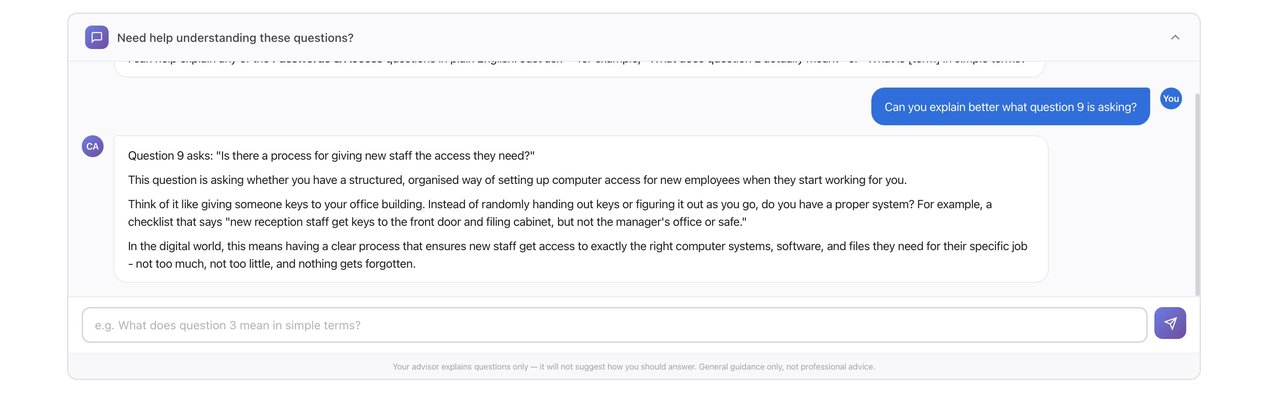
Not sure what a question is asking? Just ask.
Every question in the assessment has an AI helper built in. Tap it and ask anything — "What does this question actually mean?", "Can you give me an example?", "Why does this matter for my business?" — and you'll get a plain-English explanation instantly.
- ✓ Explains technical concepts in everyday language
- ✓ Gives real-world examples relevant to your industry
- ✓ Never suggests how to answer — just helps you understand
- ✓ No technical background required to complete the assessment
Available the moment you see your results.
Once your results are in, an AI security advisor can answer any question about what they mean — in plain English, like talking to a security professional. It can even draft a phased action plan from your specific gaps — what to fix first, next, and over time.
- ✓ "Explain my highest risk gap in simple terms"
- ✓ "Walk me through how to fix action #3"
- ✓ "Which gaps are easiest to fix myself?"
- ✓ Ask anything — your advisor knows your specific results
Get the Allied Health Cyber Health Check
Register your interestCommon Questions
Why are allied health providers targeted by cyber criminals?
What regulatory obligations apply to allied health providers?
What does the Allied Health Health Check cover?
What do I receive after completing the health check?
Further Reading
Resource
AHPRA Cyber Security Requirements for Health Practitioners
What AHPRA's Code of Conduct and the Privacy Act require from GP clinics and allied health providers — and what 'reasonable steps' looks like in practice.
Read the guide