Small business health checks are being updated. New purchases are paused while we prepare updated versions of these assessments. Register your interest and we’ll let you know as soon as they are available.
Pharmacy
Cyber Security Health Check
Healthcare is now the most targeted industry for cyber attacks — and when ransomware locks your dispensing system, you can't dispense a single script.
In about an hour, see exactly where you're exposed, turn your gaps into a prioritised action plan you can track, and get a professional report you can show your insurer, regulator, or banner group — no IT knowledge needed.
When ransomware locks a pharmacy, the dispensary stops.
The scenario is terrifyingly common: a pharmacy opens on Monday morning to find the dispensing software locked. Scripts can't be filled. PBS claims can't be lodged. The Schedule 8 register is inaccessible. Patients who need their medications today are turned away. The ransom demand: pay $50,000 in Bitcoin or lose everything. Some pharmacies pay and still lose their data. Others spend weeks rebuilding—if they can recover at all. Unlike most businesses, your outage is a patient-safety problem, not just a revenue one.
Your patient and medication records are incredibly valuable to criminals. Dispensing histories contain everything needed for identity theft, insurance fraud, and prescription fraud: Medicare numbers, dates of birth, addresses, and complete medication profiles. Unlike a credit card that can be cancelled, this information is permanent. A stolen health record is worth 10-50 times more than a credit card number.
The Pharmacy Board, AHPRA, and the Privacy Act have real consequences.
Protecting patient confidentiality isn't just an ethical duty — it's a registration requirement. The Pharmacy Board of Australia and AHPRA can impose conditions on, suspend, or cancel the registration of pharmacists whose practices suffer preventable data breaches. The Privacy Act adds penalties up to $50 million for failing to protect health information, which counts as "sensitive information" needing higher protection. State drugs-and-poisons laws impose their own record-keeping duties. "Our software vendor handles IT" is not a defence.
PBS Online and Medicare claiming are high-value targets.
Your PRODA and PBS Online credentials provide access to claiming, prescription data, and My Health Record. Compromised credentials mean fraudulent PBS claims lodged in your name, bulk claiming irregularities, and Department of Health investigations that take months to resolve. Multi-factor authentication isn't optional anymore—and when did you last review who in the pharmacy has access?
Controlled-substance fraud starts with compromised pharmacy systems.
Criminals target pharmacies specifically to access Schedule 8 records and dispensing systems—particularly for opioids and other drugs of dependence. If your dispensing software or real-time prescription monitoring access is compromised, you could find records altered or fraudulent supplies attributed to your pharmacy. Health regulators and police will come knocking, and proving what happened takes months.
This health check is built specifically for pharmacies.
Plain-English questions covering dispensing software protection (Fred, Minfos, LOTS, Aquarius, etc.), PBS Online / PRODA and My Health Record access, Schedule 8 register and real-time prescription monitoring security, electronic prescription handling, point-of-sale and payment systems, patient records, and staff awareness. No technical jargon—designed so any pharmacy owner or manager can complete it and understand the results.
What you get:
What your results look like
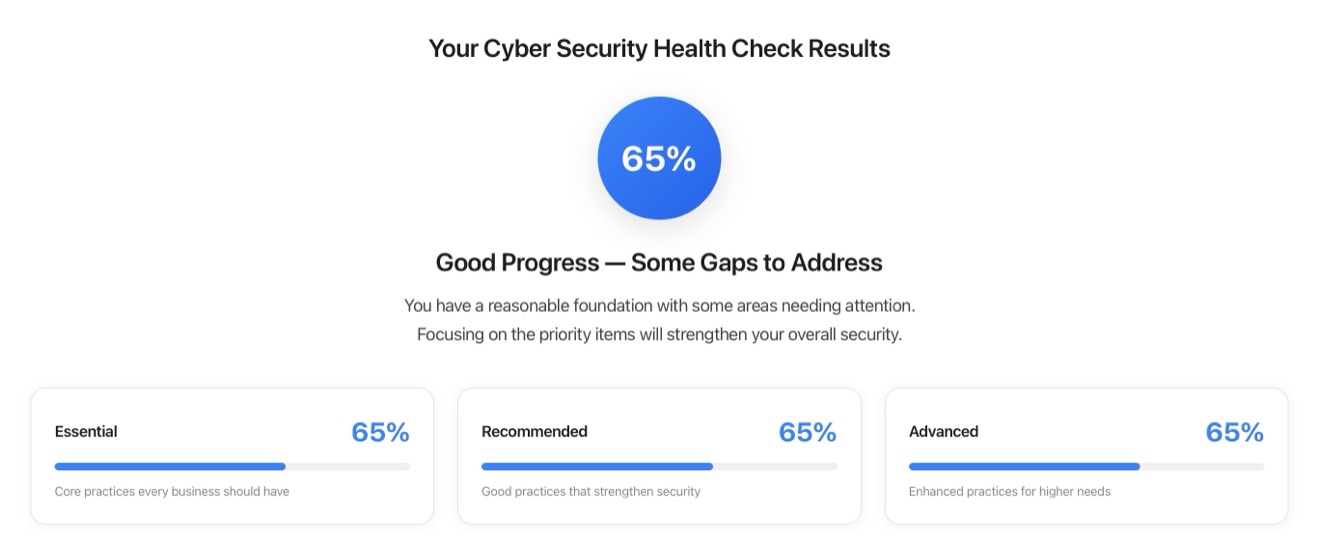
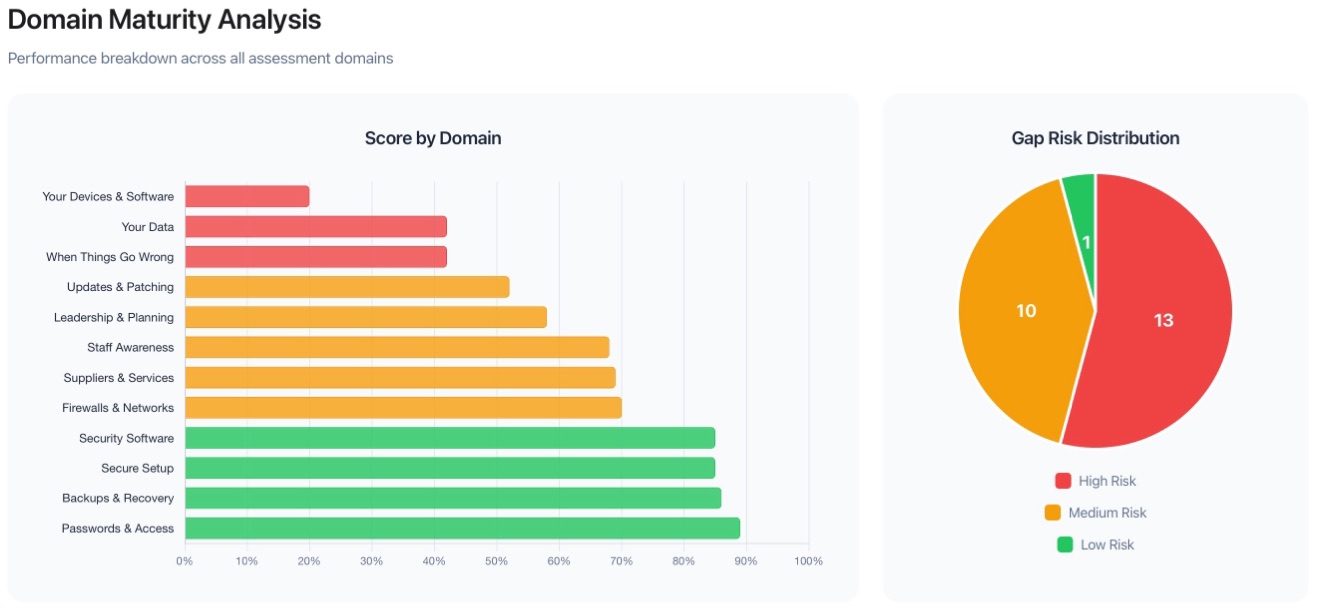
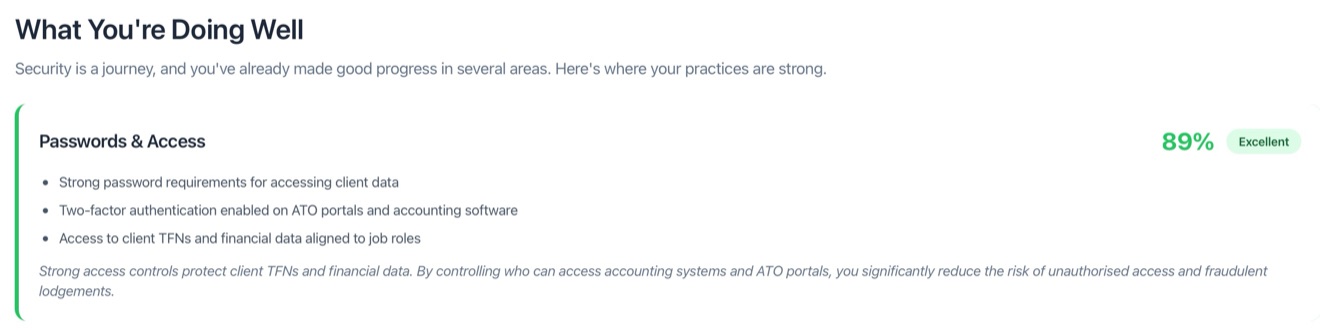
Finish in about an hour and you get a clear overall score, a breakdown across every security domain, and every gap turned into a prioritised action plan you can track and export. (Example output.)
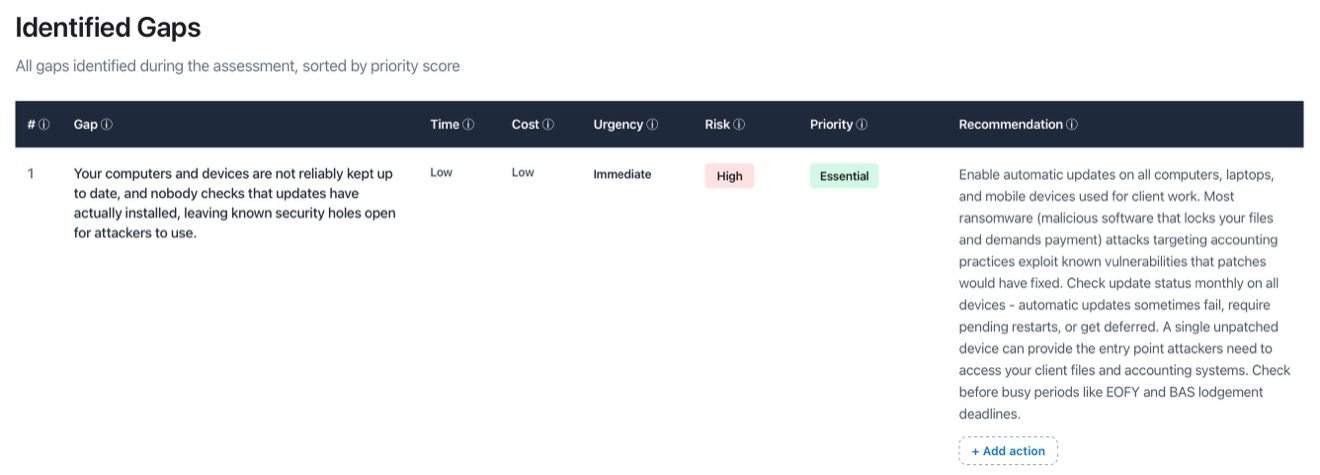
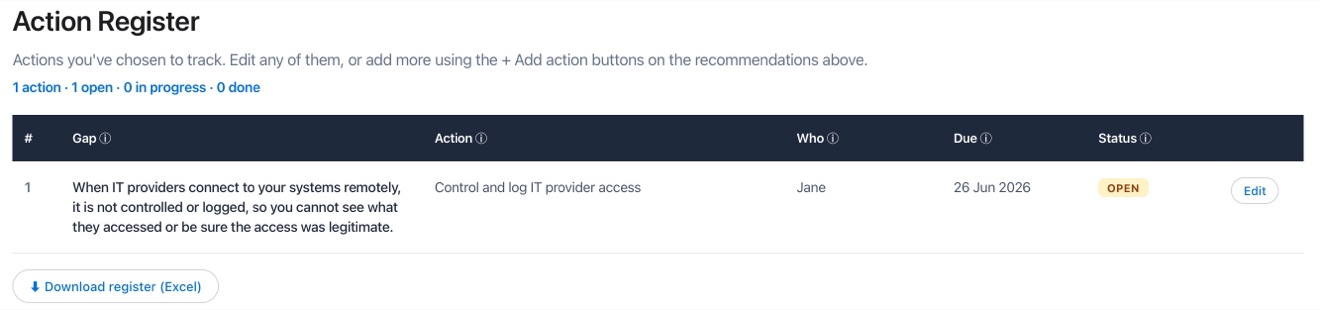
What You Receive
Every assessment generates a comprehensive report. Download a sample below.
Summary Report
Plain-English findings with scores, prioritised improvement plan, risk associations, and resources
Download SampleComplete it in about 60 minutes. No technical knowledge required. Your data never leaves your device.
Who is this for?
Pharmacy owners, proprietor pharmacists, and pharmacist managers responsible for the business. Independent pharmacies and banner-group stores alike. Any community pharmacy that runs dispensing software, claims through PBS Online, and handles patient records—and wants to understand its cyber security posture without needing IT expertise.
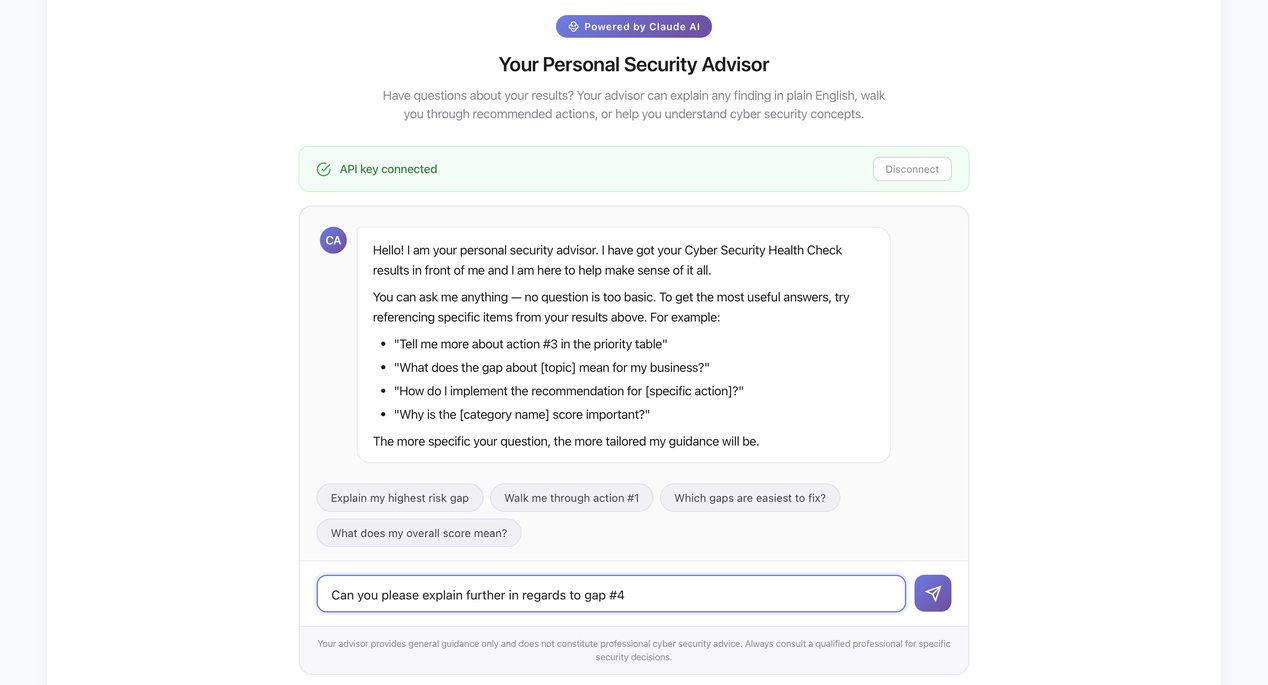
Your Assessment Includes a Personal AI Security Advisor
Two AI assistants are built into the tool — one to help you during the assessment, one to help you make sense of your results. Like having a security professional on call.
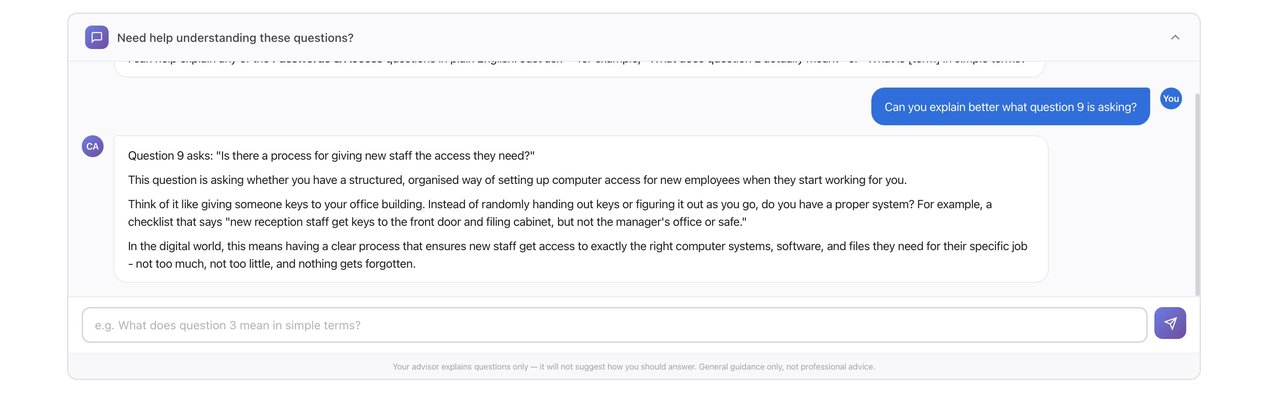
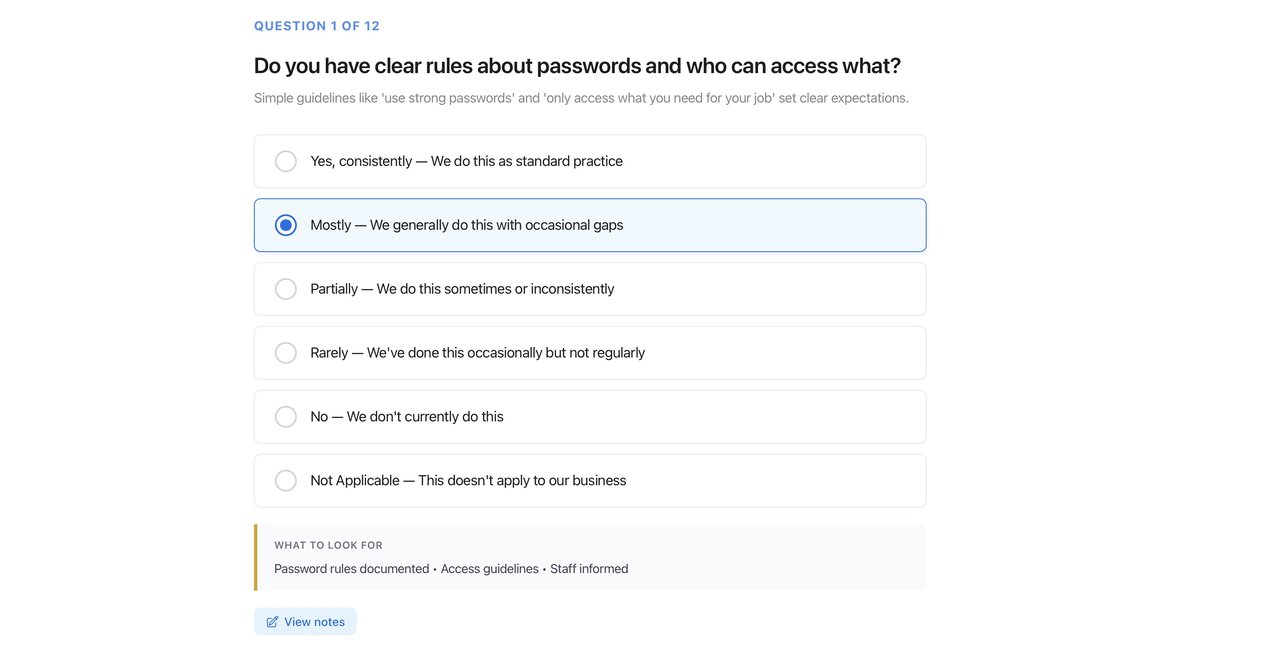
Not sure what a question is asking? Just ask.
Every question in the assessment has an AI helper built in. Tap it and ask anything — "What does this question actually mean?", "Can you give me an example?", "Why does this matter for my pharmacy?" — and you'll get a plain-English explanation instantly.
- ✓ Explains technical concepts in everyday language
- ✓ Gives real-world examples relevant to your industry
- ✓ Never suggests how to answer — just helps you understand
- ✓ No technical background required to complete the assessment
Available the moment you see your results.
Once your results are in, an AI security advisor can answer any question about what they mean — in plain English, like talking to a security professional. It can even draft a phased action plan from your specific gaps — what to fix first, next, and over time.
- ✓ "Explain my highest risk gap in simple terms"
- ✓ "Walk me through how to fix action #3"
- ✓ "Which gaps are easiest to fix myself?"
- ✓ Ask anything — your advisor knows your specific results
Get the Pharmacy Cyber Health Check
Register your interestCommon Questions
Why are pharmacies targeted by cyber criminals?
What cyber security obligations do pharmacies have?
What does the Pharmacy Health Check cover?
What do I receive after completing the health check?
Further Reading
Resource
AHPRA Cyber Security Requirements for Health Practitioners
What AHPRA's Code of Conduct and the Privacy Act require from pharmacies and other health practitioners — and what 'reasonable steps' looks like in practice.
Read the guide