Small business health checks are being updated. New purchases are paused while we prepare updated versions of these assessments. Register your interest and we’ll let you know as soon as they are available.
Real Estate Agency
Cyber Security Health Check
Real estate agencies are at the centre of Australia's biggest cyber fraud epidemic: settlement scams.
In about an hour, see exactly where you're exposed, turn your gaps into a prioritised action plan you can track, and get a professional report you can show your insurer, regulator, or clients — no IT knowledge needed.
Settlement fraud has cost Australians hundreds of millions of dollars.
The scam is brutally simple: criminals compromise an email account in the property transaction chain—agent, solicitor, or buyer—then send fraudulent payment instructions with altered bank details. Deposits and settlement funds vanish. The average loss is over $100,000. Agencies have been named in lawsuits, lost their licences, and seen their reputations destroyed.
Your trust account makes you a target. Real estate trust accounts hold millions in deposits, rent, and bond money. Criminals monitor compromised email accounts for months, waiting for the right transaction. One successful fraud can wipe out your trust account—and your business with it.
Fair Trading, your auditor, and the Privacy Act have real consequences.
State Fair Trading regulators now look at cyber security as part of trust-account compliance, and your annual audit examines the controls around electronic transfers. A breach that basic security would have prevented puts your licence at risk — and can make principals personally liable. The Privacy Act adds penalties up to $50 million for failing to protect the personal information you collect.
You handle some of the most sensitive personal information imaginable.
Driver's licences, passports, financial statements, employment records—all routinely collected for tenant applications and sales. This is identity theft gold. One breach exposes hundreds of people to fraud. The Privacy Act requires you to protect this information—and notify everyone affected if you fail.
Rental scams damage your reputation even when you're the victim.
Criminals scrape listings from your website, create fake ads, and steal bond money from unsuspecting tenants. When those tenants turn up at your office demanding answers, it's your agency's name attached to the fraud. Can you demonstrate you've taken steps to protect your listings and brand?
This health check is built specifically for real estate agencies.
Plain-English questions covering trust account security, settlement fraud prevention, property management systems, tenant application data, email security, and verification procedures. No technical jargon—designed so any principal or office manager can complete it and understand the results.
What you get:
What your results look like
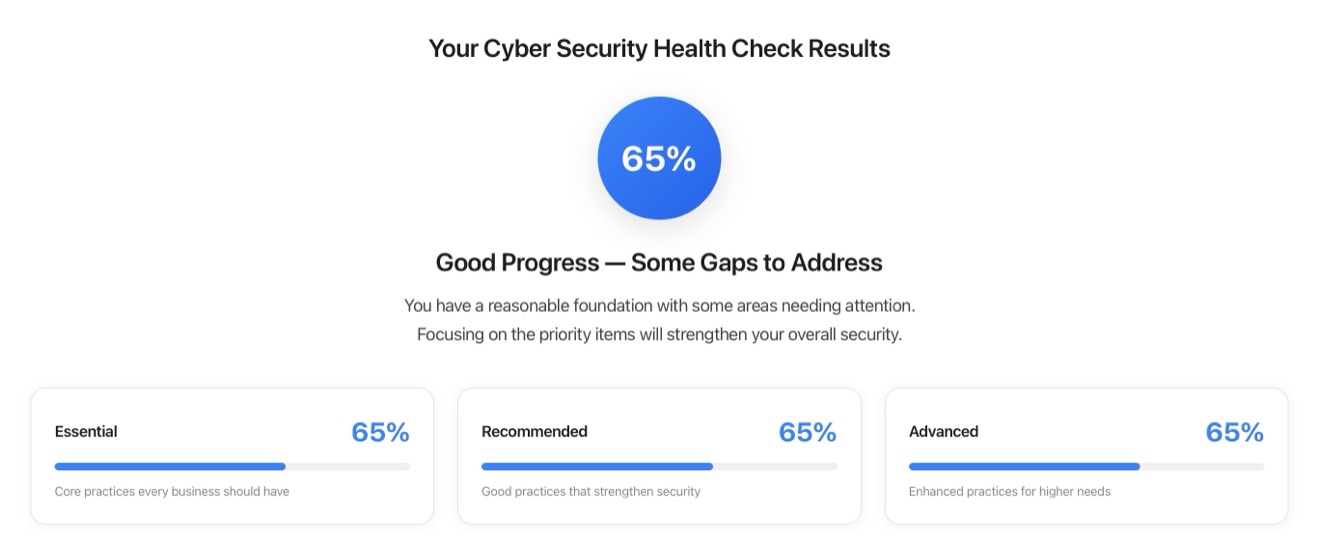
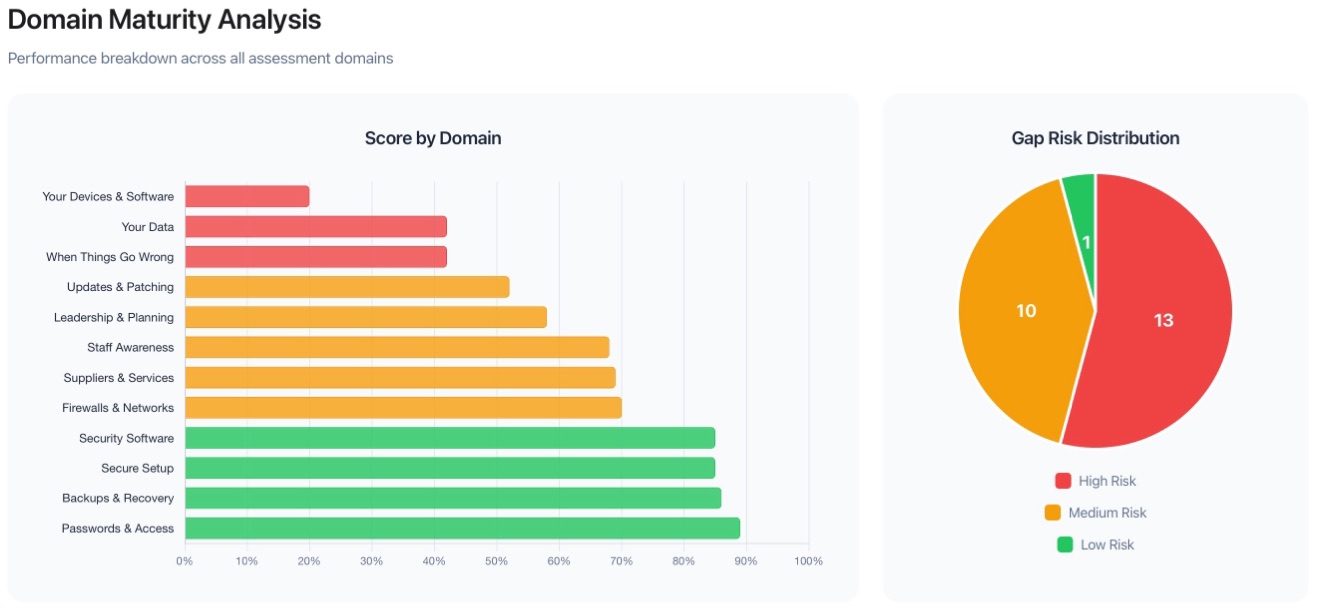
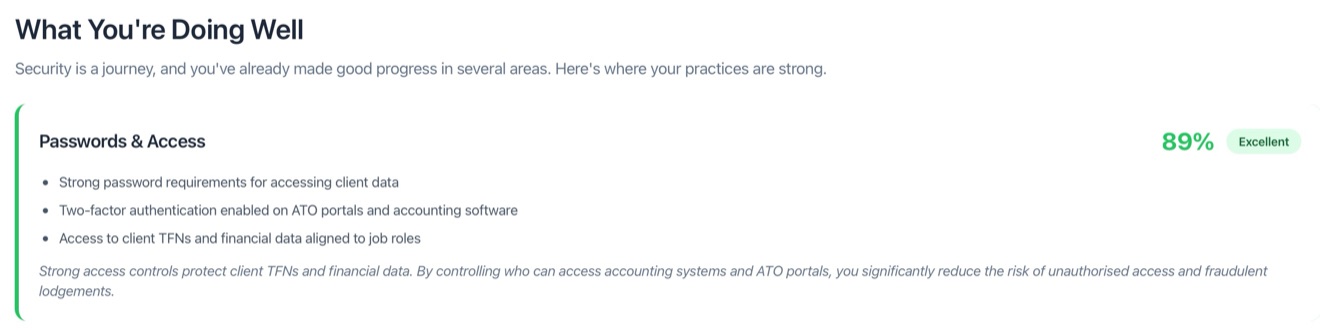
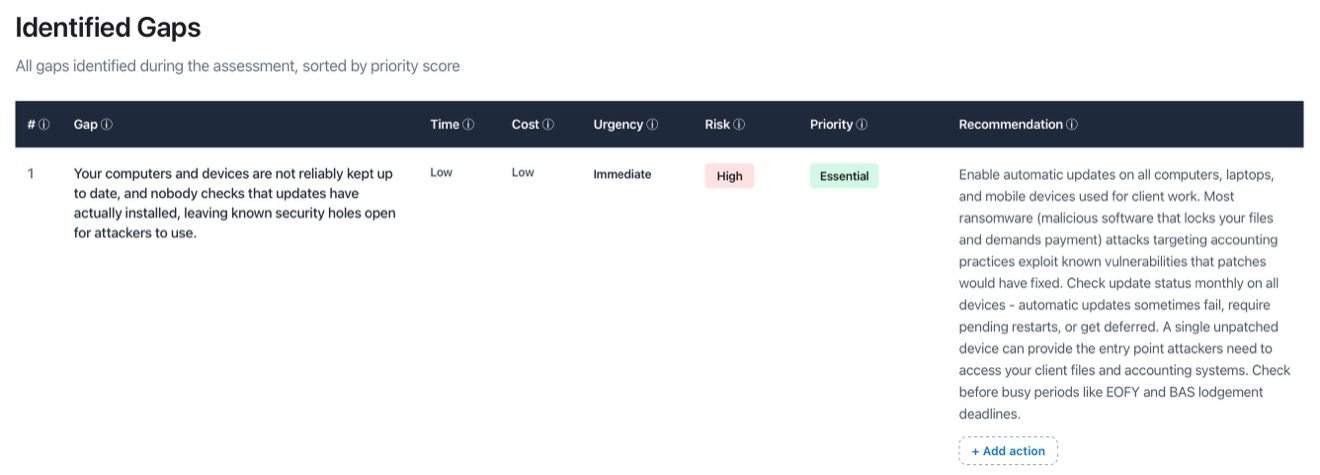
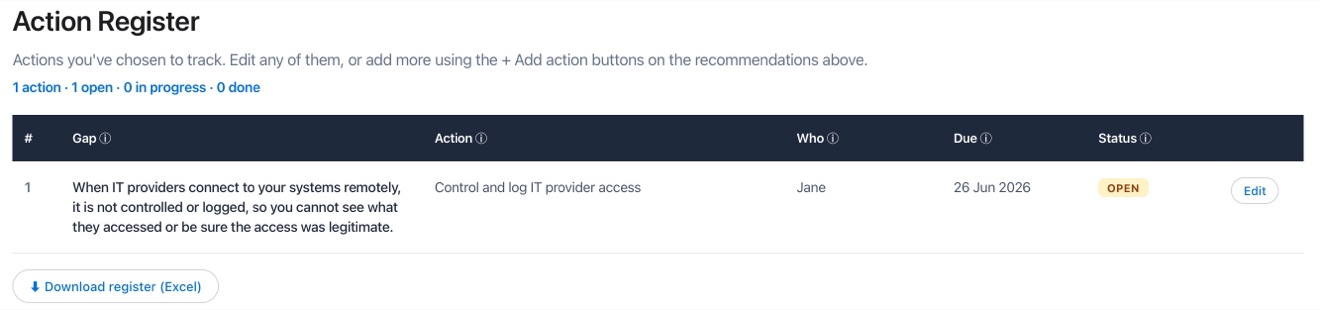
Finish in about an hour and you get a clear overall score, a breakdown across every security domain, and every gap turned into a prioritised action plan you can track and export. (Example output.)
What You Receive
Every assessment generates a comprehensive report. Download a sample below.
Summary Report
Plain-English findings with scores, prioritised improvement plan, risk associations, and resources
Download SampleComplete it in about 60 minutes. No technical knowledge required. Your data never leaves your device.
Who is this for?
Principals, licensees, and office managers of real estate agencies. Whether you focus on sales, property management, or both—if you handle trust money, tenant data, or settlement transactions, this health check is designed for you.
Your Assessment Includes a Personal AI Security Advisor
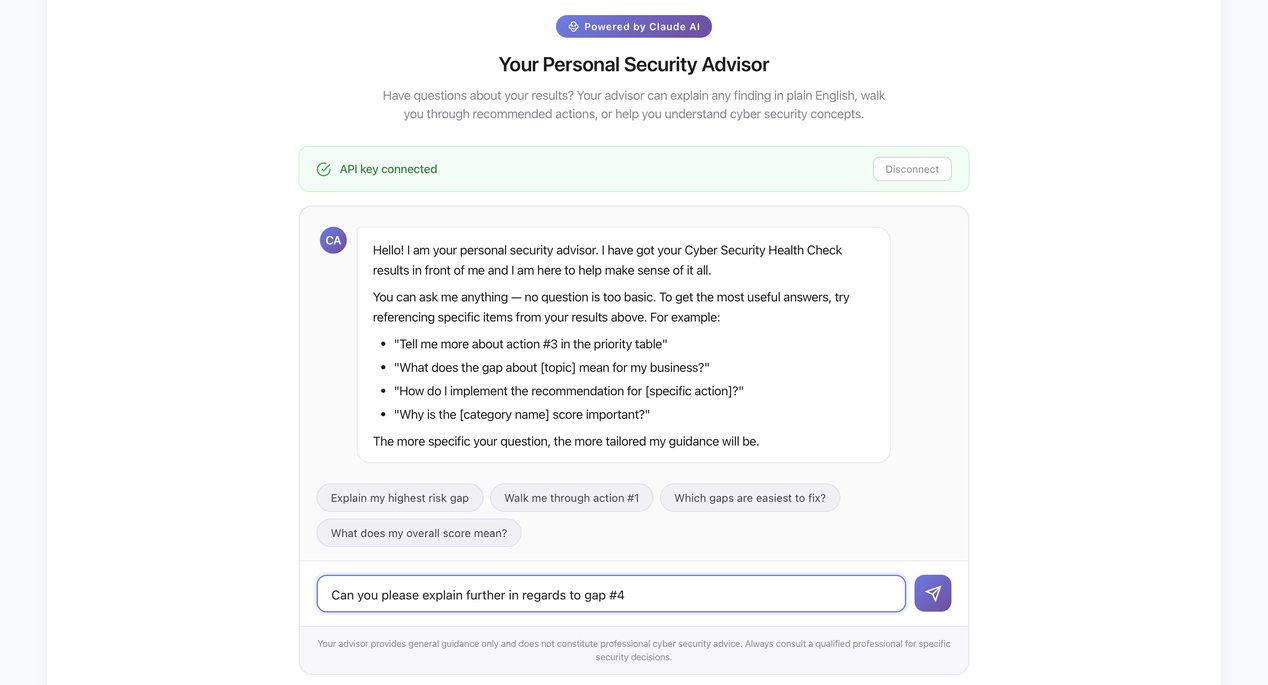
Two AI assistants are built into the tool — one to help you during the assessment, one to help you make sense of your results. Like having a security professional on call.
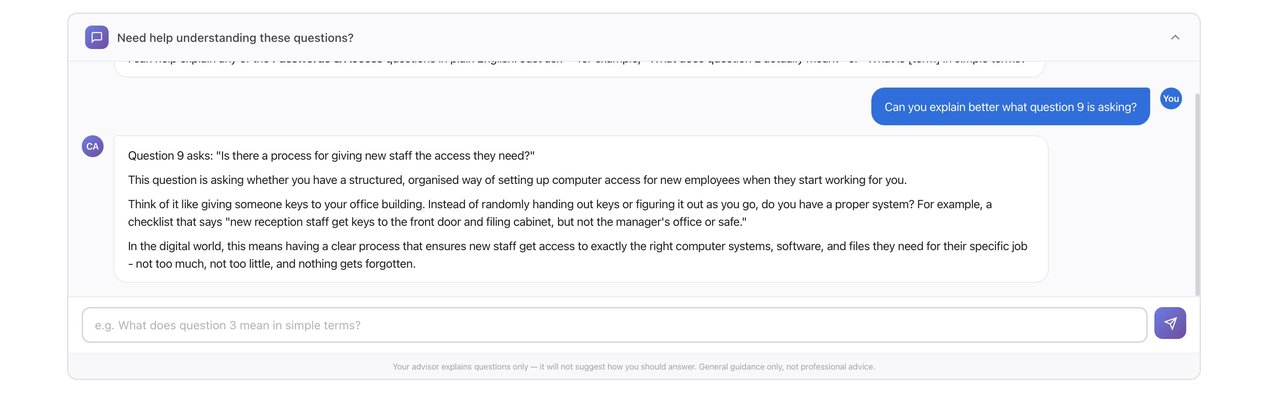
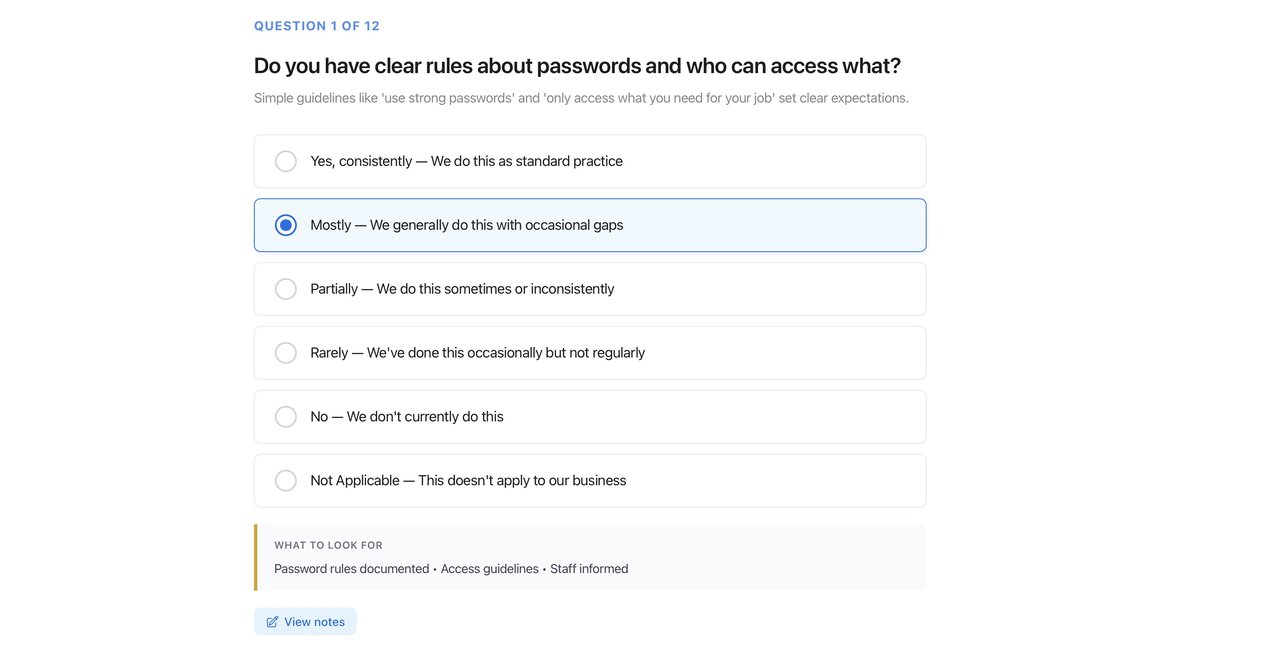
Not sure what a question is asking? Just ask.
Every question in the assessment has an AI helper built in. Tap it and ask anything — "What does this question actually mean?", "Can you give me an example?", "Why does this matter for my business?" — and you'll get a plain-English explanation instantly.
- ✓ Explains technical concepts in everyday language
- ✓ Gives real-world examples relevant to your industry
- ✓ Never suggests how to answer — just helps you understand
- ✓ No technical background required to complete the assessment
Available the moment you see your results.
Once your results are in, an AI security advisor can answer any question about what they mean — in plain English, like talking to a security professional. It can even draft a phased action plan from your specific gaps — what to fix first, next, and over time.
- ✓ "Explain my highest risk gap in simple terms"
- ✓ "Walk me through how to fix action #3"
- ✓ "Which gaps are easiest to fix myself?"
- ✓ Ask anything — your advisor knows your specific results
Get the Real Estate Cyber Health Check
Register your interestCommon Questions
Why are real estate agencies targeted by cyber criminals?
What regulatory obligations apply to real estate agencies?
What does the Real Estate Agency Health Check cover?
What do I receive after completing the health check?
Further Reading
Resource
Cyber Security for Real Estate Agencies
Why real estate agencies face trust account fraud and BEC attacks on settlements, what Fair Trading requires, and the controls that protect client funds and data.
Read the guide